How people find you on Google, and which pages and products turn visits into sales. Free is everything you connect and see; Pantheon adds asking about it in your own AI.
Free
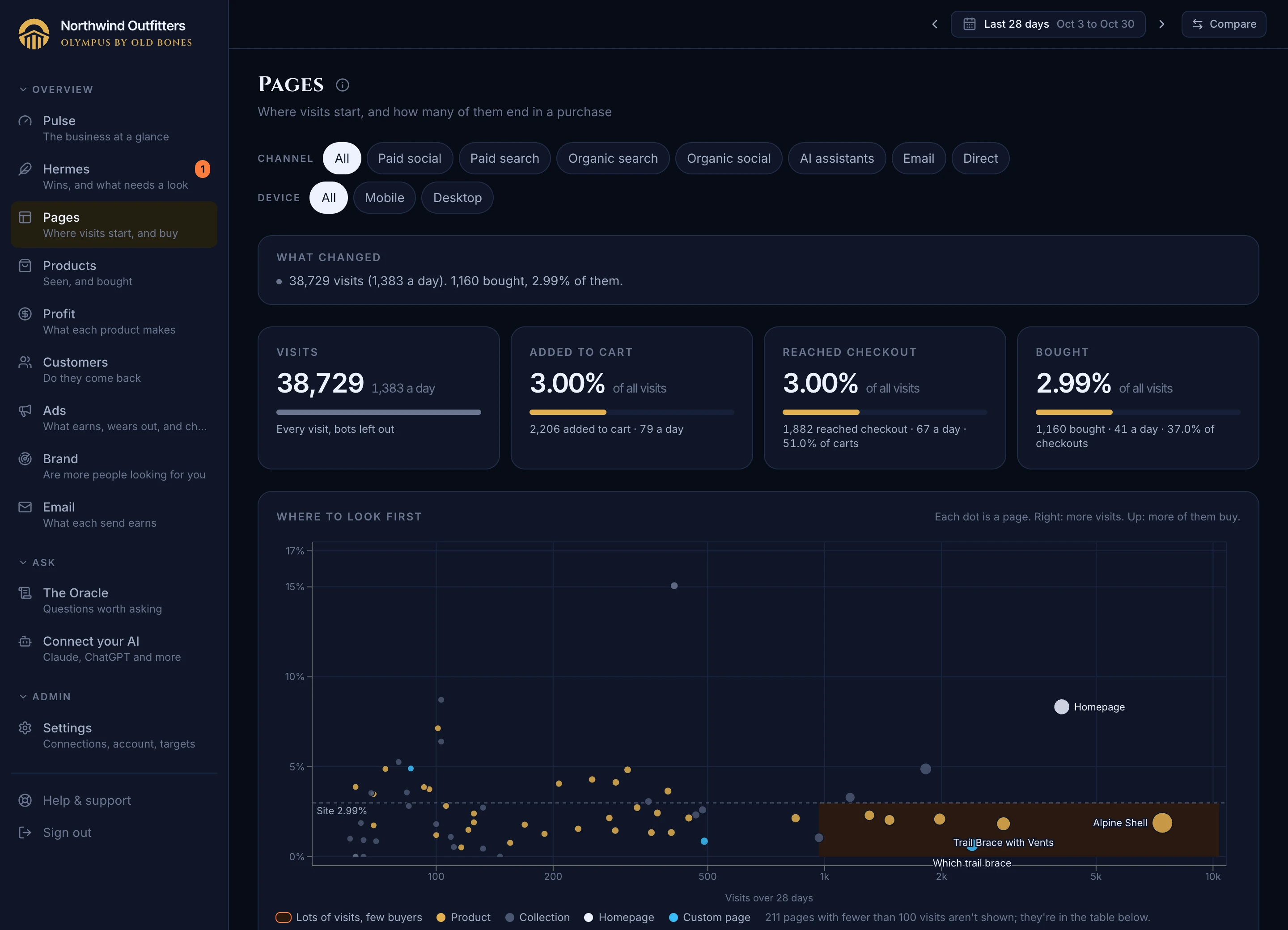
For every page a visit starts on, see how many visits added to cart, reached checkout and bought, by where the visitor came from and on which device. The pages with lots of visits and few buyers come to the top, so you know where to look first. Works on your phone, and your full history loads when you connect Shopify.
Sound familiar? Knowing sales dropped but not which page dropped, or guessing from a store-wide conversion rate that hides it.
Where: Pages
Free
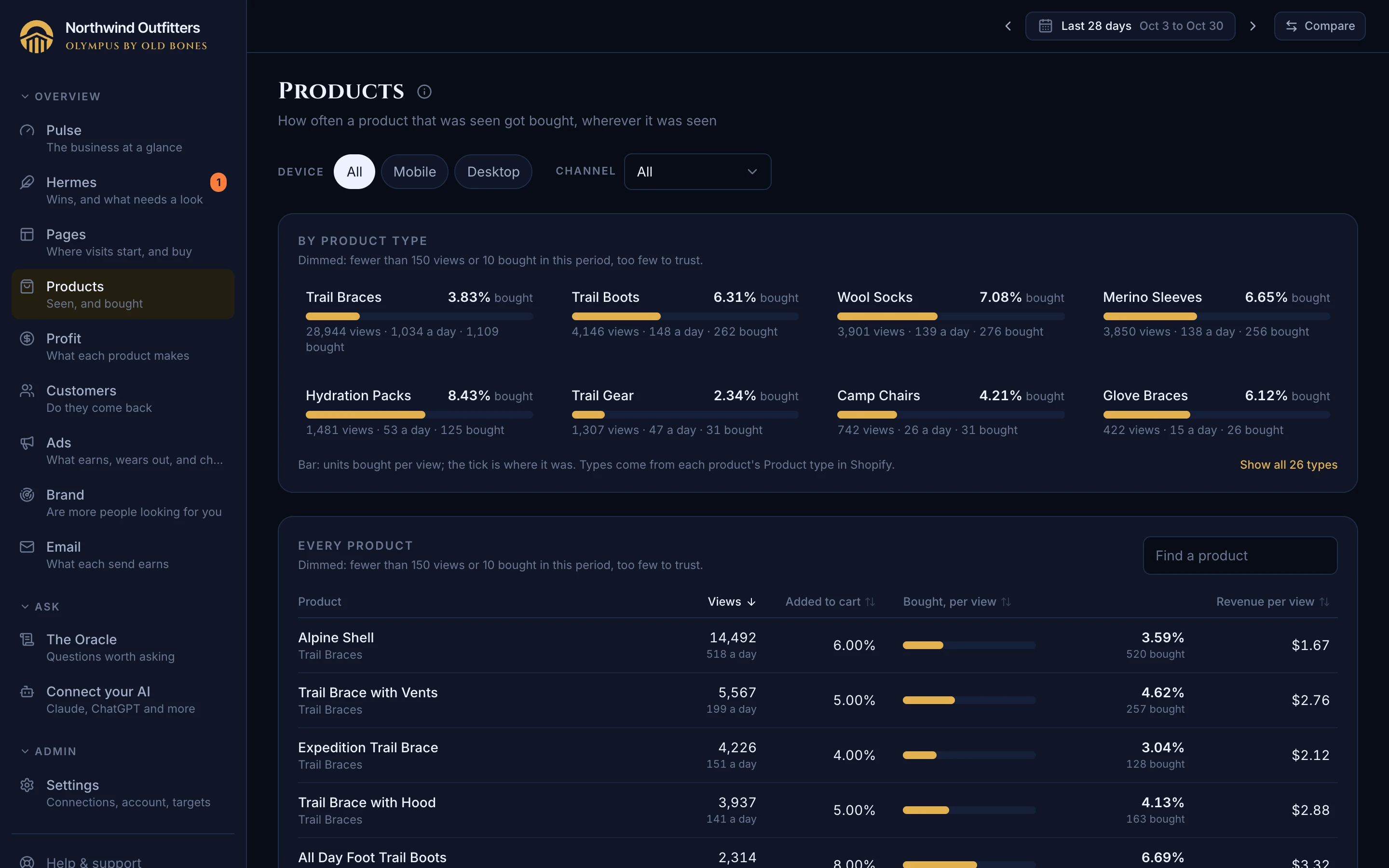
For every product shoppers look at, wherever they see it, how often it's added to cart and bought and what it earns per view, by where the visitor came from, and against every other product so a store-wide dip isn't blamed on one. Free gifts and subscription renewals are counted apart, not as sales from views, so a product people subscribe to reads as well as its page actually sells, with the rate including renewals beside it. A rate resting on too few sales to trust is dimmed, never hidden. When Google Analytics stops seeing one product's sales, that product is flagged, so a tracking gap never reads as a sales drop. Without Google Analytics yet, Products still shows your product pages' visits, add-to-carts and orders from Shopify, marks what Google Analytics would add, and connects it in one click.
Sound familiar? Not knowing which products people look at and don't buy, or reading a price change from orders alone.
Where: Products
FreeMore on Pantheon
Every page a visit starts on, with the sales its visits brought in and what each visit was worth: net sales after discounts and returns, from the visit that bought. Sort by revenue per visit to compare an ad's custom page, a collection and the homepage on what they earn, not just how many convert. Revenue per visit splits by channel too, so a page you pay to send people to is judged on what its paid visits bring in, not on everyone who lands there. Orders that never came through a page, like draft orders and subscription renewals, are counted apart, so every page's figure is its own. On the Pantheon plan your AI reads the same numbers.
Sound familiar? Sending ads to a landing page and only learning its conversion rate, not whether it earns more than the homepage would.
Where: Pages
FreeMore on Pantheon
What Google search sells (and what ChatGPT and other AI assistants send you), how many of its visitors buy, and the clicks, impressions, click-through rate, average place in Google's results and share of clicks from people who weren't searching your name behind it, plus how often you show just off page one and on page one with no click (the two easiest wins), and what your free clicks would cost as ads, for any day, week or period, back through your history. Each has its own chart, and Demeter reads them first, so you can tell whether search is growing because people found you or because more of them already knew your name, and what it's worth.
Sound familiar? Search Console showing a wall of numbers and no way to tell whether the store is being found more, or what that's worth in sales.
Where: Ask, The Oracle (Demeter), each metric's page, and your AI on the Pantheon plan
PaidPantheon
Ask your AI which searches you're close to page one for, and it reads every one over any period in a single look: clicks, impressions, average position and the page Google shows, each against the weeks before or the same weeks last year. It flags the searches sitting on page two, where a better title or page moves them onto page one, and the ones on page one that nobody clicks.
Sound familiar? Knowing organic search matters but not which searches are almost there, whether they're climbing or slipping, or which page Google is showing for them.
Where: Your AI on the Pantheon plan
PaidPantheon
Ask your AI which searches fell off page one of Google this month, or climbed onto it, and it answers in one look from every search Google named each day, as far back as Google keeps them: each one's position, clicks and impressions against the period before, and the page Google showed. A quiet search is never missed for falling off a daily shortlist.
Sound familiar? Seeing organic clicks dip and not knowing which searches slipped, or comparing two date ranges in Search Console one search at a time.
Where: Your AI on the Pantheon plan